
4 Things You’ll Always Find in Homes Everyone’s Jealous Of

Creating a beautiful, well-designed home does
not require expensive renovations or major spending.
By understanding a few core visual and compositional principles,
you can transform the look and feel of your existing space simply
by changing how furniture and decor are arranged.
1. Asymmetrical Balance Using the Rule of Thirds
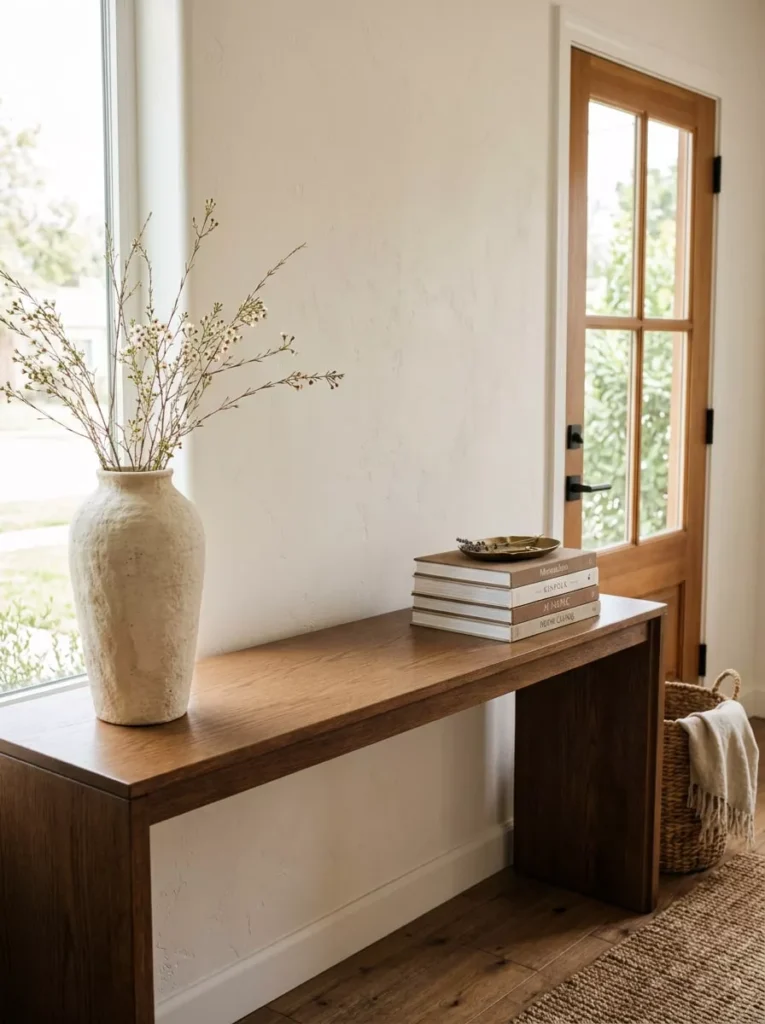
The common instinct when styling a surface—such as
a coffee table, console, mantel,
or nightstand—is to place primary items directly in the dead center.
While centering feels balanced in theory,
it creates a visual dead end with no tension
to keep the space engaging.
- The 3×3 Grid Concept: Envision a simple three-by-three grid across your surface and place key items along the vertical grid lines or at their intersection points rather than in the exact middle.
- Creating Counterweights: Placing a statement vase on the left third of a console table and balancing it with a small stack of books on the right third establishes two visual anchors at varying heights.
- Visual Breathing Room: Shifting objects off-center creates asymmetrical balance, allowing the eye to travel across the surface and appreciate the deliberate use of negative space.
2. The Frame Within a Frame Technique
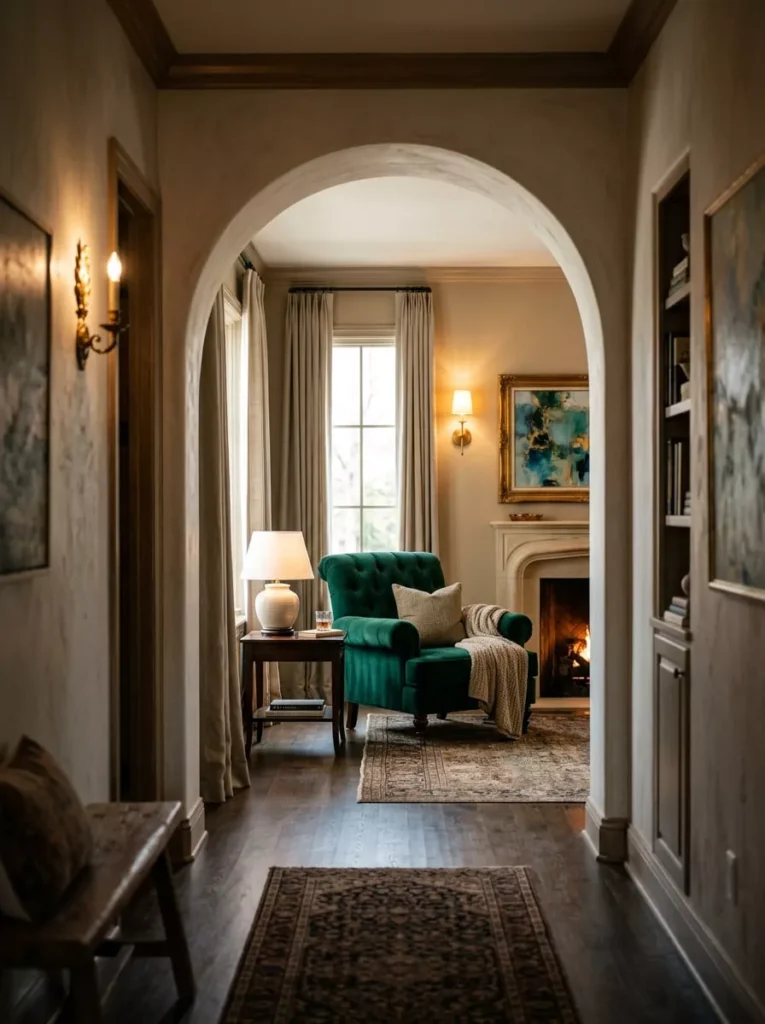
Borrowed from photography, framing involves viewing
a subject through an archway, window,
or physical border to create depth
and pull the viewer into the scene.
Architectural transitions in a home function in the exact same way.
- Auditing Sightlines: Walk through your home from the perspective of a guest. Stand at doorways, hallways, and entry points to observe what is visible in the next room.
- Spotlighting Intentional Subjects: Instead of framing a blank wall or the back of furniture, align sightlines with something visually appealing, such as a statement chair, an art piece, or an organized bedroom.
- Alternative Framing Elements: If your home lacks distinct doorways or arches, create frames using pairs of tall bookcases flanking a window, open shelving units between zones, or large wall mirrors flanked by sconces.
3. Establishing Visual Rhythm Across the Room
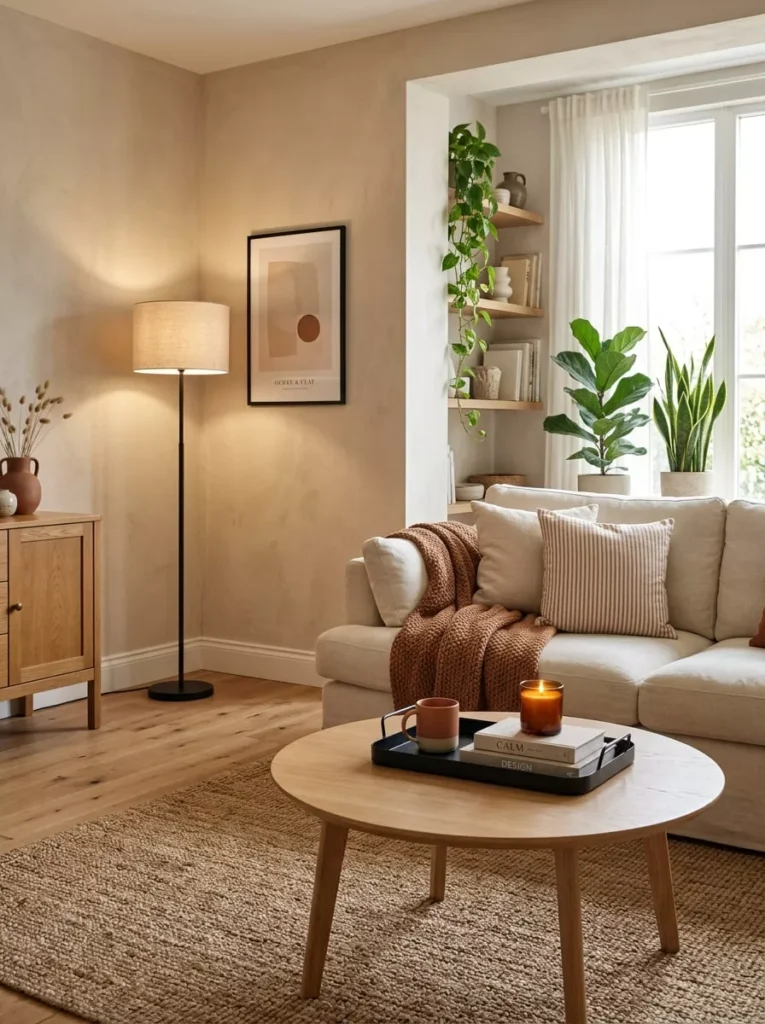
When the brain registers a color, material, or shape in one part of a room,
it instinctively searches for a corresponding element elsewhere.
An isolated piece without
any visual connection can feel out of place.
- The Rule of Triangles: Connect isolated pieces by repeating a material or color across three distinct points at varying heights (e.g., a matte black floor lamp in one corner, a black picture frame on an opposite wall, and a black decorative tray on the coffee table).
- Echoes Over Exact Matches: Avoid identical colors or matching furniture sets, which create monotony. Instead, introduce subtle variations within the same family, such as pairing a navy throw pillow with a sapphire vase and a moody art print.
- Material Harmony: Complementary textures—such as combining a woven basket, a jute rug, and a rattan lighting fixture—create cohesive visual movement without making the room feel uniform.
4. Layering Foreground, Middle Ground, and Background
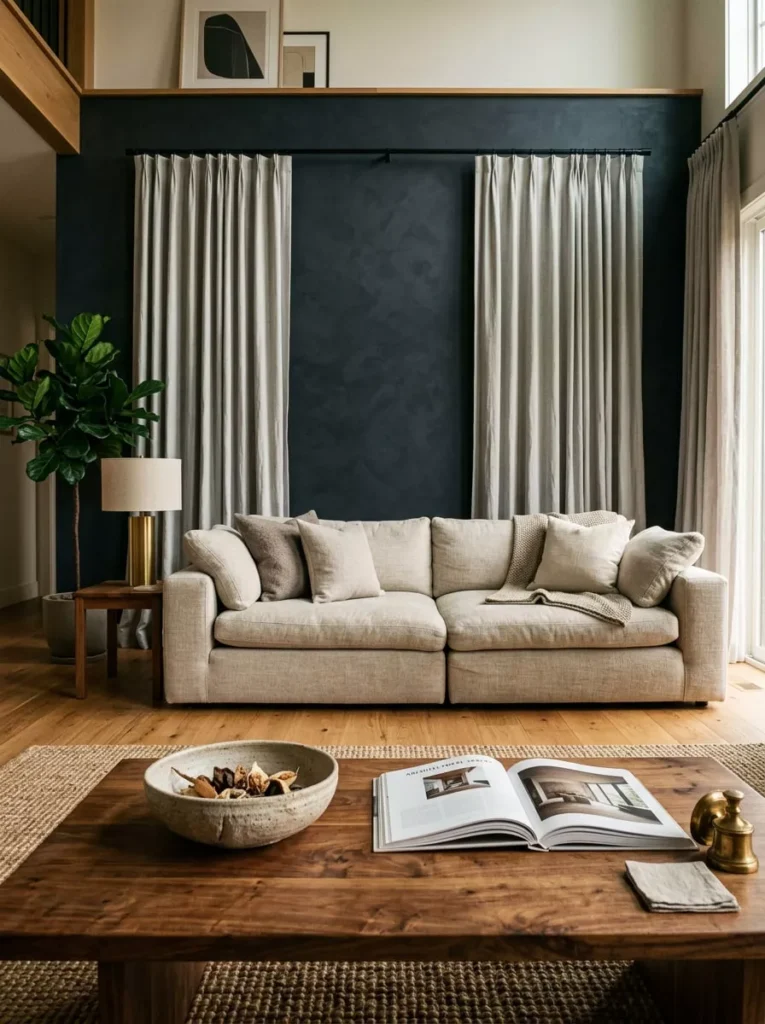
A room feels flat when furniture is pushed directly against
perimeter walls or lined up strictly side-by-side.
Treating a room like a three-dimensional composition
creates depth and visual richness:
- Background: The furthest plane in the room, consisting of walls, hanging artwork, and window curtains.
- Middle Ground: Major furniture pieces, such as sofas, beds, and main seating arrangements. Pulling a sofa just six inches away from a back wall introduces shadow lines that clearly separate the middle ground from the background.
- Foreground: The closest items to the viewer, including coffee tables, end benches, or carefully placed accent pieces.
- Overlapping Layers: Position objects slightly in front of one another rather than in a straight horizontal line. Pull accent chairs slightly ahead of floor lamps and place floor plants so they softly overlap the edge of a console or seating area.
