
20 Upgrades Every Guy’s Dorm Room Needs

Moving into a dorm room or small bedroom often defaults
to basic furniture, bare floors, and generic decor.
However, applying practical design principles
can transform a small, utilitarian space into an organized,
elevated environment on a student-friendly budget.
1. Upgrading the Floor with a Washable Runner Rug
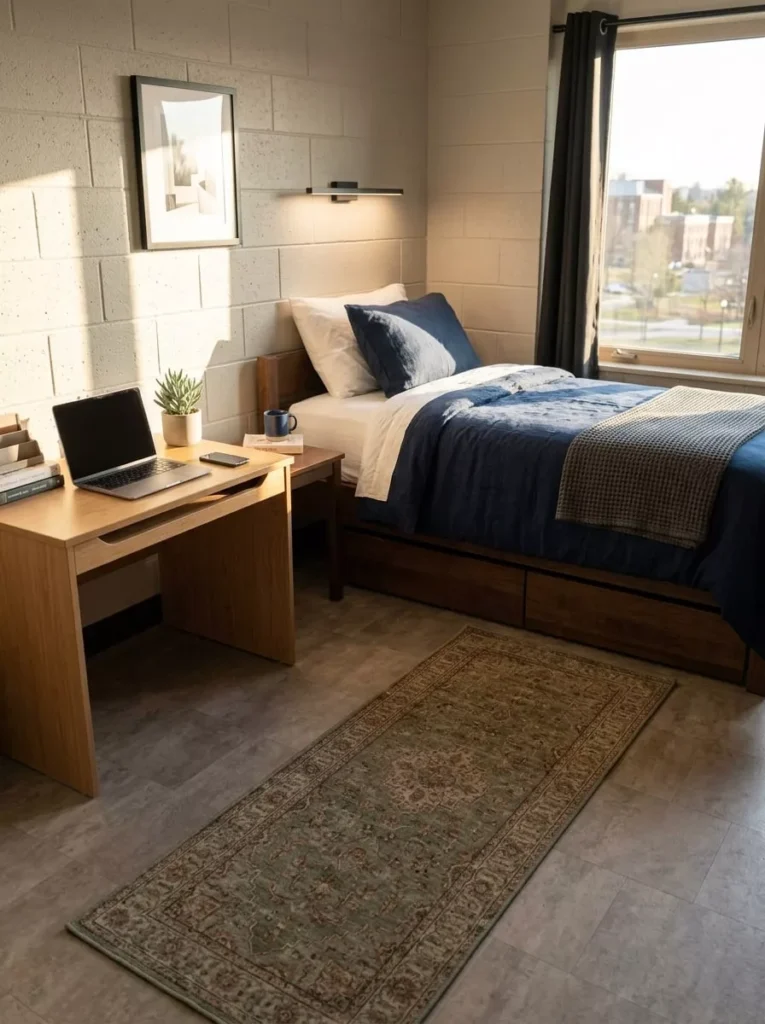
Dorm floors are typically standard vinyl tile or worn carpet.
Adding a rug improves the visual aesthetic,
softens the physical feel underfoot,
and absorbs sound to make the room noticeably quieter.
- Low-Pile Fabric: Flat, low-pile rugs do not trap dirt, will not catch under doors, and are easy to vacuum.
- Machine Washable: Spills are inevitable, making washable materials essential.
- Muted Patterns: Subtle vintage patterns conceal everyday wear and tear better than solid colors.
- Runner Dimensions: In narrow spaces between a bed and desk, a long, thin runner fills the walkway properly without looking like a small bath mat.
2. Optimizing the Desk Workspace
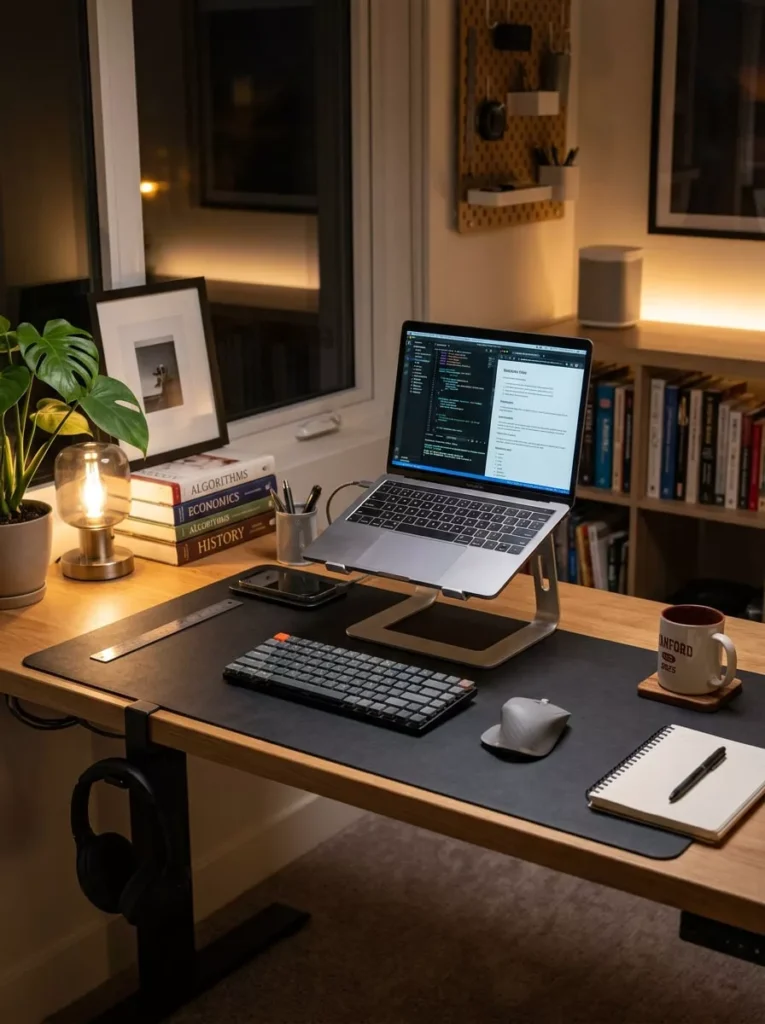
Because a desk is where most waking hours are spent,
setting it up intentionally
keeps the space functional and clutter-free:
- Foldable Laptop Stand: Raises your screen to eye level to prevent neck strain.
- Full-Width Desk Mat: Replaces a small mouse pad and visually unifies your laptop, keyboard, and mouse into a single clean zone. Dark gray or black faux leather or stitched mats offer a polished look.
- Headphone Hook: An adhesive or rotating hook attached to the side of the desk keeps large headphones off your primary workspace.
3. Organizing Footwear and Hanging Storage
Leaving shoes and workout gear scattered creates visual clutter
and unpleasant odors.
- Tiered Shoe Racks: Multi-level bamboo or metal racks keep footwear stacked neatly in a compact footprint.
- Over-the-Door Hooks: These hang directly over the door without requiring drills or wall damage, providing dedicated space for gym bags, jackets, and towels.
4. Upgrading to a Hamper with a Lid
Open mesh bags allow dirty laundry odors
to spread throughout the room.
Upgrading to a solid hamper with
a lid keeps dirty clothes hidden and seals in smells.
Slim models with removable inner bags make transporting
laundry down the hall simple while saving precious floor space.
5. Using a Candle Warmer Lamp
Open flames and candles are banned in nearly
all college dorms as fire hazards.
A candle warmer lamp uses a top-down warming bulb
to melt jarred candles without producing smoke or fire.
This delivers a consistent, warm pool of light alongside
masculine scents like cedarwood or sandalwood.
6. Investing in High-GSM Matching Towels
Mismatched, low-quality towels wear down quickly
and dry poorly.
Choosing a matching set in neutral tones—such as dark gray,
sand, or navy—creates visual uniformity.
- GSM Rating: Grams per square meter (GSM) indicates towel density and absorbency. Standard cheap towels are 300 to 400 GSM, whereas higher-density 700 GSM towels offer the plush feel and absorbency found in luxury hotels.
7. Installing Rechargeable Wall Lamps and Picture Lights
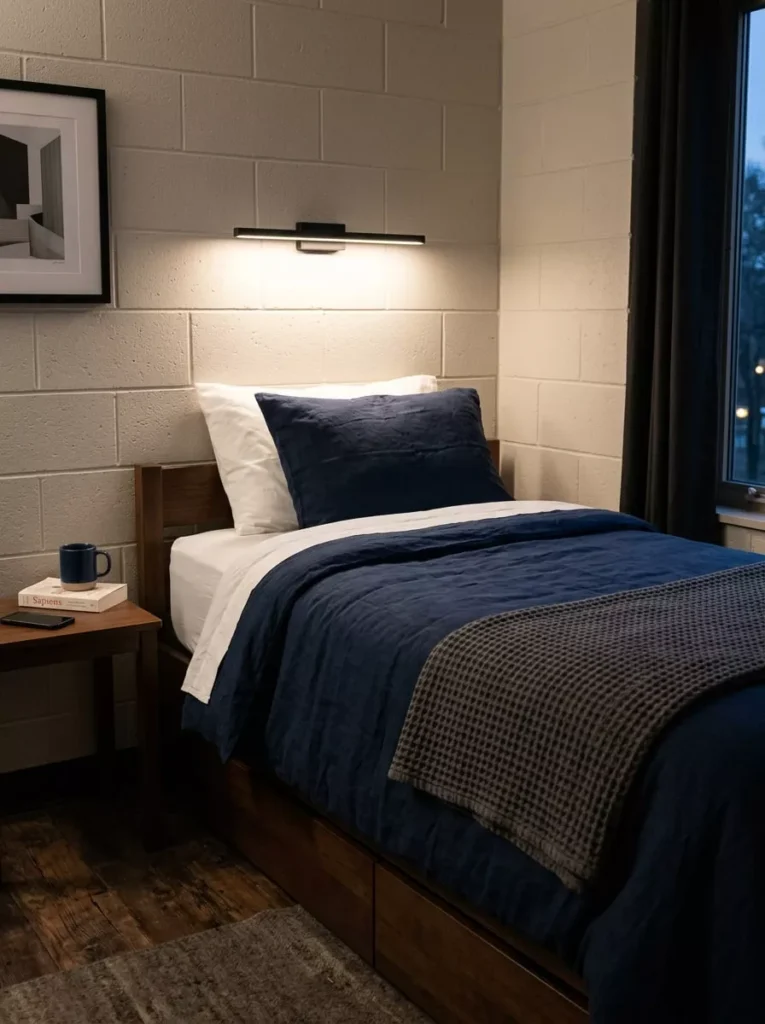
Harsh overhead fluorescent lighting
and novelty colored LED strips make a room feel chaotic.
- Adhesive Wall Sconces: Battery-powered, rechargeable lamps stick directly to walls using non-damaging adhesive. Magnetic models easily detach from their base for charging.
- Picture Lighting: Mounting a slim accent light above wall art adds focused, warm illumination reminiscent of a gallery.
8. Framing Textured Canvas Prints
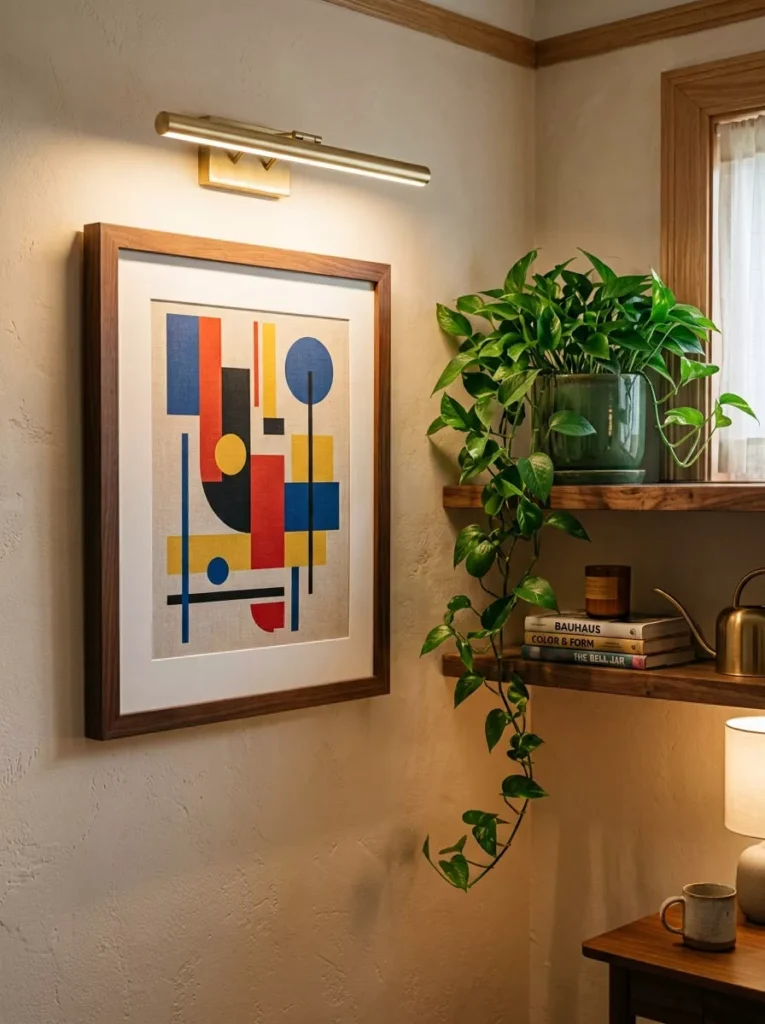
Paper posters taped to the wall quickly look dated and cheap.
Unstretched canvas prints offer a glare-free,
textured alternative at a low cost.
- Subject Matter: Consider vintage sports prints, architectural sketches, retro travel illustrations, or minimalist Bauhaus geometric designs.
- Frames: Always place prints inside solid frames (such as dark walnut finishes) rather than hanging raw paper.
9. Choosing Masculine, Dark-Muted Bedding
The bed occupies the largest visual footprint in a dorm room.
Plain white comforters easily show stains,
while branded sports bedding can look juvenile.
- Colors: Dark, muted tones such as charcoal, navy, olive, or deep brown hide marks and create a balanced contrast against plain white dorm walls.
- Layering: Adding a textured waffle-weave throw blanket across the foot of the bed adds visual depth and extra warmth.
10. Adding Versatile, Compact Seating
Providing alternative seating prevents guests
from having to sit on your bed:
- Fabric Poufs: Serve as a guest seat, a footrest, and a soft texture in a room full of hard surfaces. Choose foam-filled options, as bean-filled seating is often restricted by housing fire codes.
- Folding Floor Chairs: Padded seats with adjustable backrests sit flat on the floor for gaming or studying, and fold away easily under the bed when not in use.
11. Installing a Full-Length Mirror
Small medicine cabinet mirrors do
not allow you to check your full outfit before heading out.
- Hanging vs. Leaning: Over-the-door full-length mirrors hang on brackets without wall damage, while arched leaning mirrors add height and soften sharp room angles.
- Light Reflection: A tall mirror acts as a secondary window, bouncing natural light around a compact space.
12. Building a Cable Management Landing Zone
Multiple electronic devices plugged into
an open power strip create visual chaos.
Creating a unified charging station keeps cords under control:
- Flat-Plug Power Strip: Allows desks to sit flush against the wall.
- Cable Management Box: Encloses the power strip and hides excess cord slack inside.
- Adhesive Cable Clips: Route necessary wires along the back edges of furniture.
- Charging Dock: A compact wooden or composite dock neatly organizes phones, smartwatches, and wireless earbuds in one spot.
13. Installing a Tension Rod and Blackout Curtains
Standard dorm window blinds are often thin, damaged,
or ineffective against outside campus streetlights.
- Spring-Loaded Tension Rods: Fit inside the window frame using internal pressure, requiring zero screws or drilling.
- Blackout Panels: Help block artificial light and regulate room temperature for better sleep quality.
14. Managing Airflow and Noise with a USB Desk Fan
Dorm buildings frequently lack fine temperature control
and generate high nighttime hallway noise.
A compact, quiet USB desk fan cools the immediate area
while providing consistent white noise
to block sudden sounds from the hall.
15. Regulating Sleep with a Sunrise Alarm Clock
Using a smartphone as an alarm encourages late-night
and early-morning screen scrolling.
A sunrise alarm clock gradually increases light intensity
over thirty minutes before the alarm sounds,
working with natural circadian rhythms to wake the body smoothly.
16. Removing Wrinkles with a Handheld Steamer
Traditional irons require bulky boards
that take up valuable storage space.
A compact handheld garment steamer heats up in seconds,
using water vapor to remove wrinkles from shirts, trousers,
and jackets before presentations, interviews, or events.
17. Switching to Slim Velvet Hangers
Mismatched plastic and wire hangers make closets look cluttered
and let clothes slip onto the floor.
Slim velvet hangers create an orderly, uniform appearance,
take up half the width of plastic hangers to double usable rail space,
and keep fabrics firmly in place.
18. Maintaining Cleanliness with a Handheld Vacuum
Full-sized upright vacuums are difficult to store and rarely get used.
A small, cordless handheld vacuum allows
you to clean desk crumbs, entryway dirt,
and rug debris in under a minute without setup friction.
19. Bringing in a Low-Maintenance Pothos Plant
A living houseplant breaks up the sterile look of cinder block walls
and synthetic furniture.
A pothos plant thrives in low-light environments,
tolerates irregular watering schedules,
and holds up well when left alone during school breaks.
Placing it in a simple ceramic pot elevates the room’s design.
20. Creating Cohesion with the Rule of Three
A room filled with great individual items can still look
uncoordinated without intentional repetition.
Selecting one subtle accent color (like olive, navy, or charcoal)
and one wood finish (like walnut),
and repeating each across three separate elements in the room,
ties the entire space together into a cohesive, deliberate design.
