
7 Neuroscience Tricks That Make Any Home Feel 10x Better

When you walk into a home that is not your personal style
yet still feels immediately inviting and comfortable,
that reaction is driven by psychology.
Understanding foundational neurological
and environmental principles allows you to make
your living space feel significantly better without costly renovations
or buying massive amounts of furniture.
1. Prospect-Refuge Theory and the Command Position
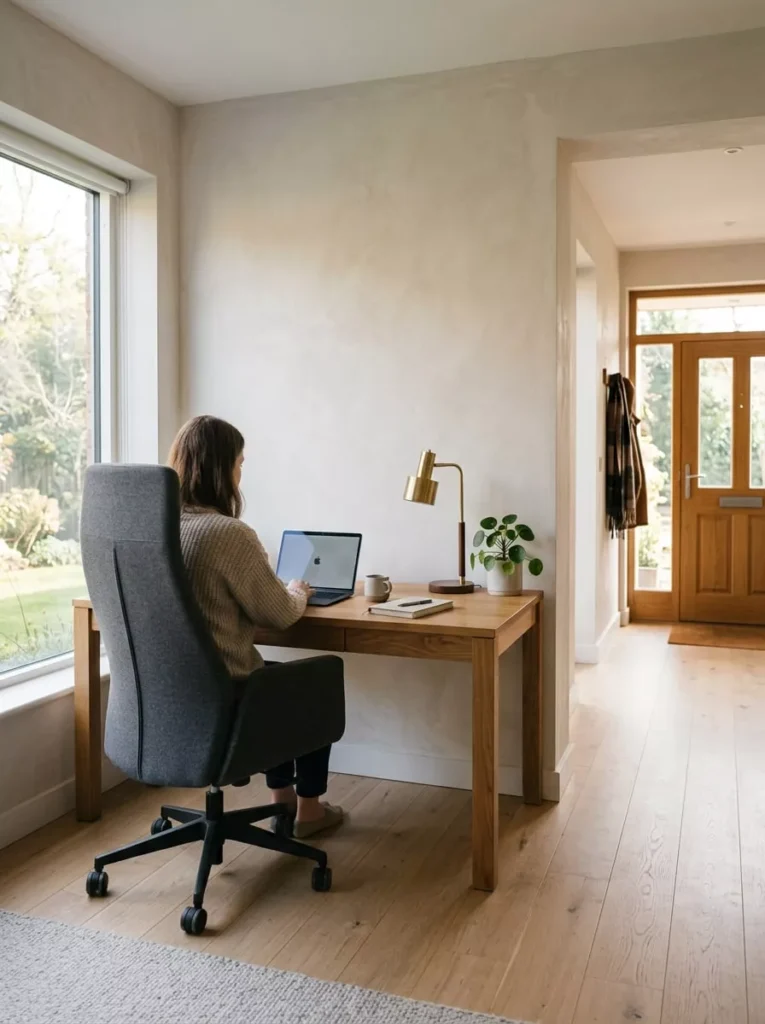
The human brain is wired to feel most relaxed in environments
where you can see what is approaching
while having your back protected.
Rooted in evolutionary biology, early humans sought the edge
of forests or shallow caves—spaces offering an open view of the
landscape (prospect) alongside a solid barrier behind them (refuge).
When furniture is positioned with its back
to an entryway—such as a home office desk facing a blank wall
or a sofa floating directly in front of
a busy hallway—the amygdala stays mildly active,
monitoring unseen blind spots.
This can cause restlessness, tension, and poor focus.
- The Command Position: Position your primary seating (desk chair, sofa, and head of the bed) against a solid wall with a clear sightline to the room’s main door.
- Creating Artificial Refuge: If floating a sofa in an open-concept layout, place a solid console table behind it layered with visual weight—such as lamps, stacked books, or dense foliage—to create a psychological barrier.
2. The Diderot Effect and Bridge Pieces
Named after the 18th-century French philosopher Denis Diderot,
the Diderot Effect occurs when acquiring a single new,
high-status item shifts your baseline, making
all surrounding possessions appear outdated or cheap by comparison.
This psychological friction often triggers
an impulsive urge to replace everything in the room.
To prevent one new purchase from causing a spending spiral,
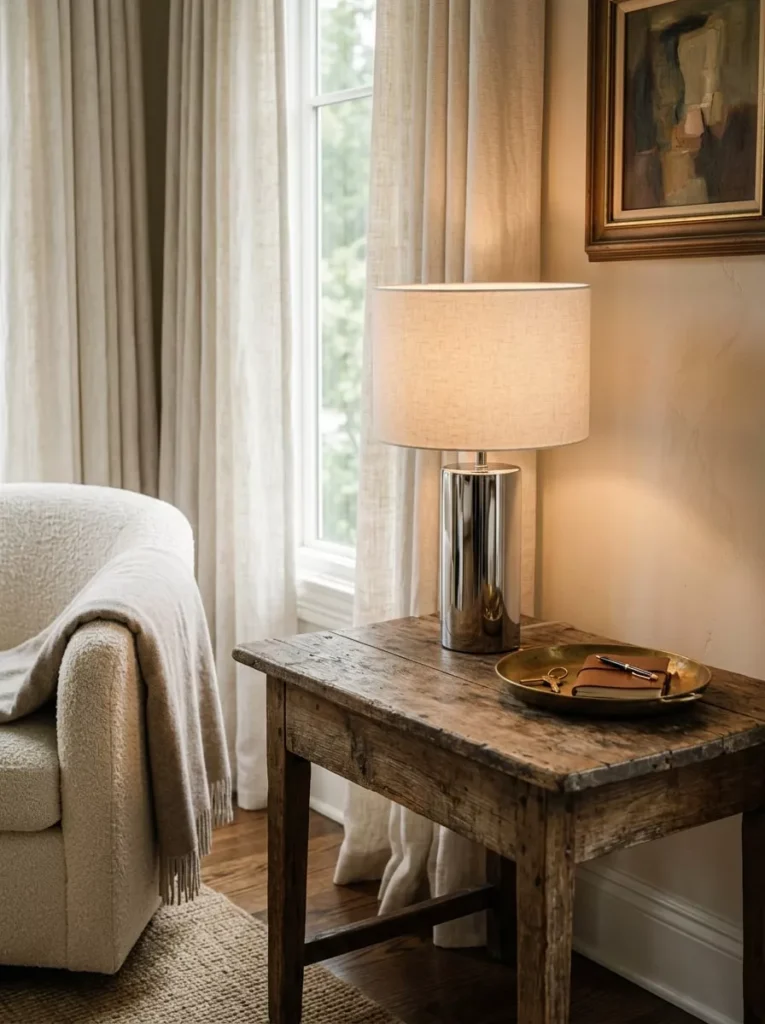
design your space with bridge pieces—transitional materials
that harmonize contrasting styles, ages, and aesthetics:
- Effective Bridge Materials: Raw or weathered wood, aged brass, distressed leather, textured linen, and varied ceramics.
- Layered Baseline: Incorporating mixed textures and finishes prevents a room from looking like a rigid catalog set and gives it the flexibility to absorb new additions naturally.
3. Sensory Gating and Acoustic Anchoring
A home is experienced through sound as well as sight.
The brain uses a process called sensory gating
to filter out predictable, repetitive background
noises so you can concentrate and rest.
Modern interiors full of hard, flat, reflective surfaces
(such as bare drywall, unadorned glass, and hard flooring)
create sharp, unpredictable sound reflections.
When sound continuously bounces, the brain struggles to filter
it out, interpreting the acoustic environment as chaotic.
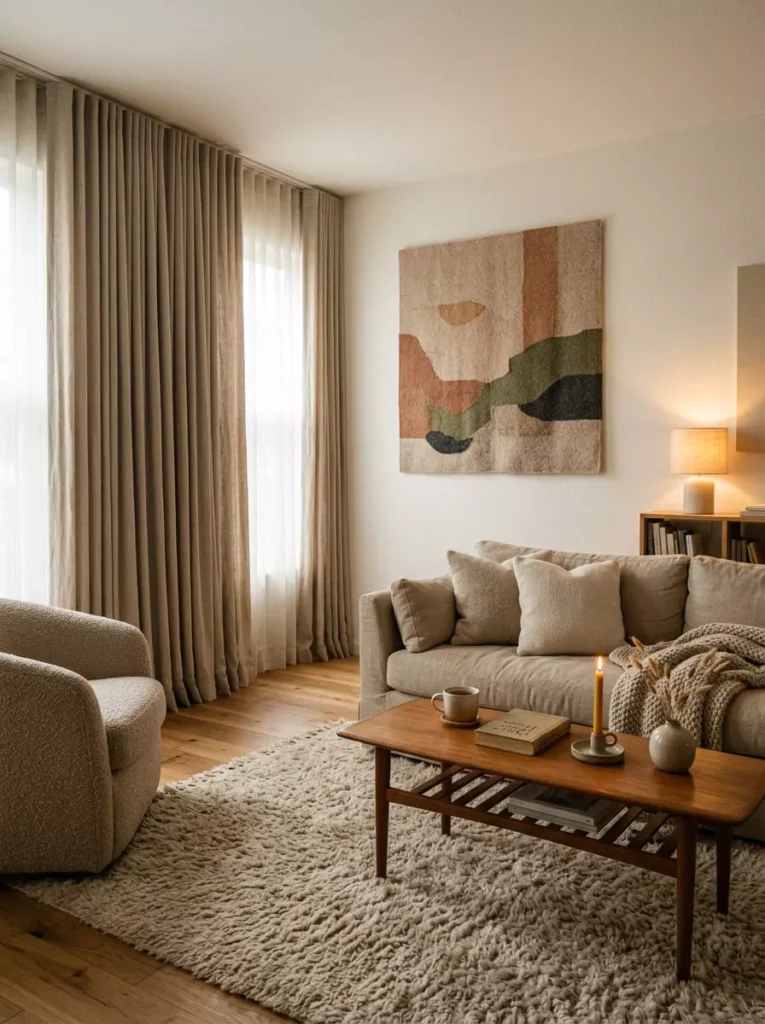
- Dense Rug Pads: Placing a thick acoustic pad under an area rug often absorbs more ambient sound than the rug itself.
- Soft Vertical Surfaces: Use thick, lined drapery instead of relying solely on hard blinds.
- Acoustically Friendly Art: Prioritize tapestries, felt-backed art, and unframed canvas prints over glass-framed prints, which reflect sound similarly to bare drywall.
4. The Mere Exposure Effect and the Analog Test
Documented by psychologist Robert Zajonc,
the mere exposure effect is the tendency to develop
a preference for things simply because they are familiar.
In the digital age, social media algorithms feed
users the same micro-trends hundreds of times,
causing individuals to mistake repeated exposure
for genuine personal taste.
To break algorithmic priming and avoid rapid trend fatigue,
ground your design choices in an analog audit of your everyday life:
- Closet Analysis: Look at the real clothing colors and textures you wear repeatedly rather than aspirational items.
- Physical Real-World Places: Identify restaurants, hotels, or cities where you naturally feel at ease, noting their lighting, warmth, and layering.
- Physical Reference Books: Browse through physical art, architecture, and interior books at a bookstore or library to discover what appeals to you before an algorithm primes your choices.
5. Attention Restoration Theory and Soft Fascination
Developed by environmental psychologists,
Attention Restoration Theory explains that human attention
operates in two modes:
- Directed Attention (Effort Mode): Used for demanding tasks like answering emails, analyzing data, and driving in traffic. It requires active filtering and quickly leads to cognitive fatigue.
- Soft Fascination (Recovery Mode): Occurs when engaging with gentle, effortless natural stimuli—such as watching moving leaves, water, or flames—allowing the brain to restore itself.
Spaces dominated by smooth, synthetic, machine-made finishes
offer no organic visual complexity,
keeping the brain trapped in effort mode.
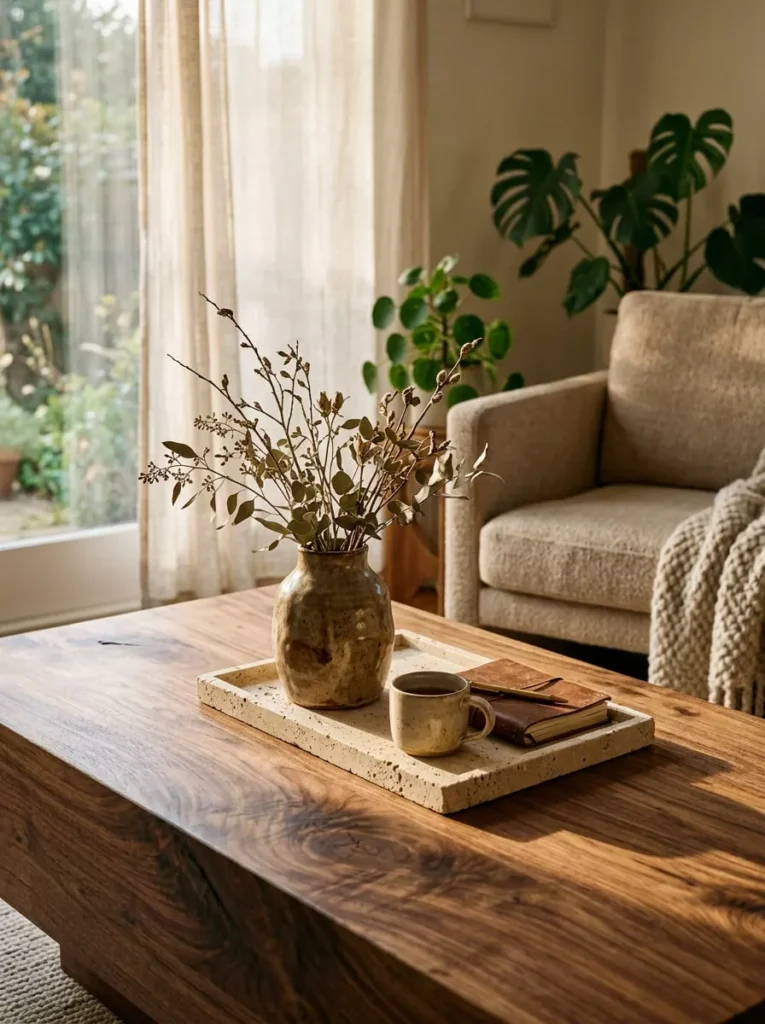
Incorporating natural, irregular patterns—such as visible
wood grain, veined natural stone, and uneven textile weaves like linen
and chunky cotton—gives your gaze a place to rest,
promoting mental recovery.
6. The Endowment Effect and the Stranger’s Price Test
Two cognitive traps often cause people to keep furniture they dislike:
the endowment effect
(valuing an object more simply because you own it)
and the sunk cost fallacy
(hesitating to discard something because of past money
or emotion invested).
Keeping an incompatible item out of guilt forces you
to compromise the entire room around it.
To overcome this design paralysis, apply the Stranger’s Price Test:
- Look at the problematic item and imagine seeing it for sale in a store or online marketplace today.
- Honestly ask yourself: Would I spend money to buy this right now and bring it into my home?
- If the answer is no, the piece is creating psychological drag. Releasing it by selling, donating, or replacing it eliminates daily visual friction.
7. Floating Furniture and Spatial Flow
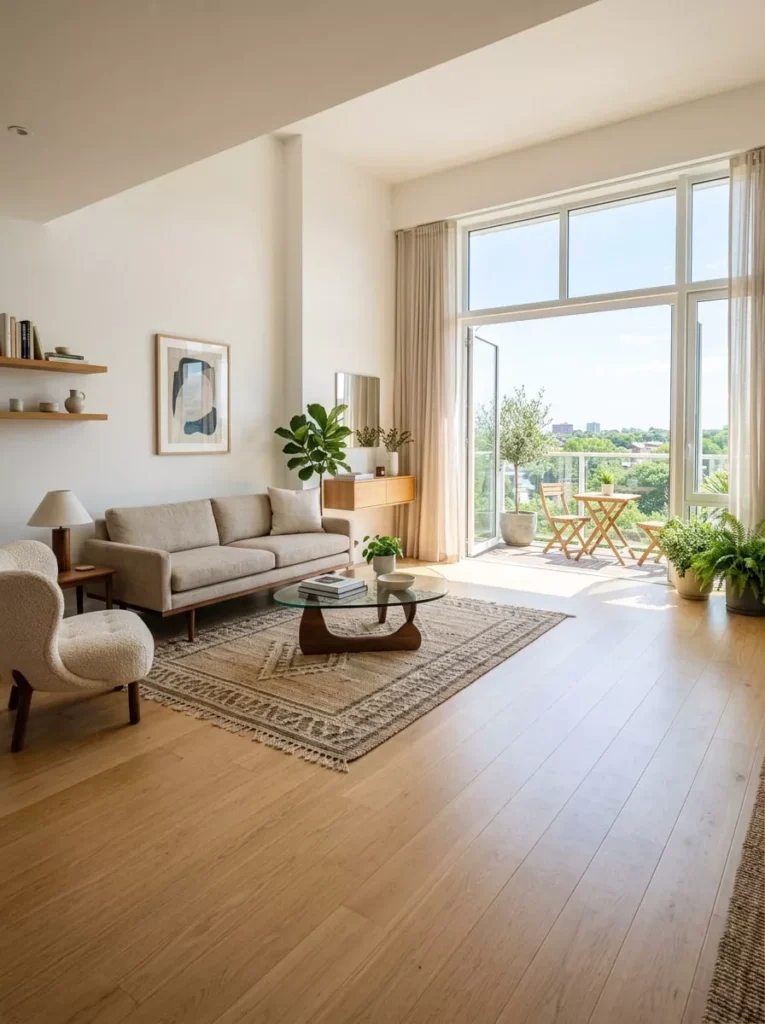
When dealing with smaller spaces,
the common instinct is to push every piece of furniture flat
against the walls to maximize open floor space in the center.
However, lining the perimeter flattens depth
and creates a sterile, waiting-room atmosphere.
- Breaking the Wall Seal: Pull sofas and main seating just 1 to 2 inches away from the wall. This subtle separation introduces a shadow line that signals depth to the brain, making the room feel larger.
- Clear Pathways: Maintain at least one uninterrupted walking lane through the space.
- Leggy Furniture: Choose pieces raised on legs with open arms and raised bases to allow light and air to pass underneath, keeping the layout visually open.
