
The Difference Between Trading and Investing

Both trading and investing involve the same core action:
making money from investments.
The differences lie in the time horizon
and the methods used to analyze assets.
Here is a breakdown of how trading and investing differ, the strategies behind them, and which approach might suit you best.
What is Trading?
Trading means buying stocks at a lower price
and selling them at a higher price over a short period.
The goal is to profit from frequent, short-term price movements
rather than the long-term growth of a company.
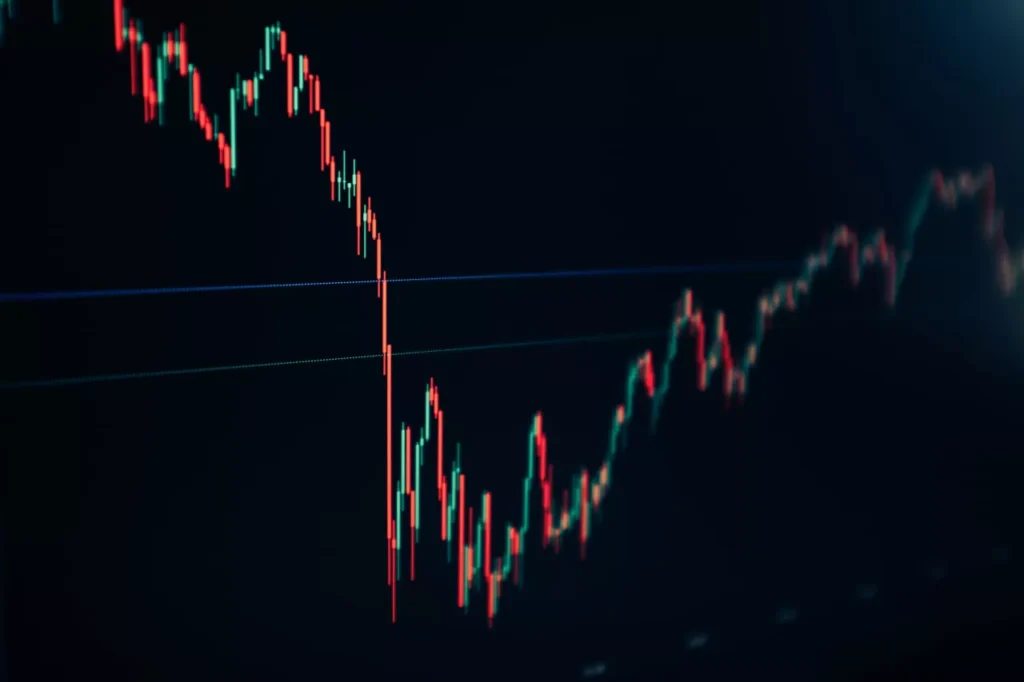
To trade effectively, you need to understand technical analysis.
Technical Analysis
Technical analysis involves studying past price movements
and patterns to forecast future price behavior.
Traders rely on the belief that historical patterns tend
to repeat themselves.
- Candlestick Charts: Traders use these graphs to track price movements. A green candle indicates the stock price is going up (more buying than selling), while a red candle means the price is going down (more selling than buying).
- Traders analyze these graphs to predict exactly when a stock will fall and when it will rise again, aiming to buy low and sell high.
The Risks of Trading
Technical analysis is not 100% accurate.
If your prediction is wrong, you lose money.
To minimize these losses, traders use a strategy called a stop-loss.
This involves setting an automatic sell order
when a stock drops to a certain price to prevent further losses.
However, the stock could drop, trigger your stop-loss,
and then rebound, causing you to lose money
and miss out on the subsequent profit.
Trading involves a lot of risk, requires constant monitoring,
and demands quick decision-making.
Types of Trading
There are several different types of trading strategies
based on timeframes:
- Day Trading: Buying and selling within the same day to profit from small price movements.
- Swing Trading: Holding assets for several days or weeks to profit from expected price changes.
- Position Trading: A longer-term strategy where traders hold assets for months to benefit from longer-term trends.
You can trade in various markets, including stocks,
Forex (currencies), commodities (gold, silver, oil, agriculture),
and cryptocurrencies.
What is Investing?
While trading focuses on short-term gains,
investing is about building wealth over a longer period.
Investing means buying assets and holding them
for an extended period, often years or decades.
Investors look for companies with strong fundamentals,
believing that their value will increase over time.
Additionally, some companies pay dividends,
meaning they distribute a portion of their profits
to investors regularly.
Unlike trading, investing relies on fundamental analysis.
Fundamental Analysis
Fundamental analysis evaluates a company’s financial health
and overall business performance to determine if it is
profitable, growing, and worth investing in.
Investors look at various metrics, including:
- Financial statements (balance sheet, income statement, cash flow statement)
- Revenue and profit margins
- Earnings per Share (EPS)
- Return on Equity (ROE)
An Example of Investing
Imagine you buy 10 shares of a successful shoe company
at $50 per share, totaling $500.
The company expands, boosts sales, and pays an annual dividend
of $2 per share (giving you $20 a year).
Over five years, the stock graph will fluctuate,
but because the company is fundamentally strong,
the overall trend is upward.
If the stock reaches $150 per share, your $500 investment
is now worth $1,500. Including your dividends,
you have built substantial wealth without needing
to monitor daily price drops.
Types of Investments
Aside from stocks, you can invest in:
- Bonds: Lending money to the government or a corporation in exchange for regular interest payments.
- Mutual Funds & ETFs: Pooling money with other investors to buy a diversified portfolio of stocks or bonds managed by professionals.
- Real Estate: Buying physical properties to generate rental income and appreciate over time.
- Cryptocurrencies: Digital assets held for long-term growth.
Trading vs. Investing: A Summary
Both approaches aim to buy an asset and sell it at a higher price,
but their core philosophies are entirely different.
- Timeframe: Trading is done in hours, days, weeks, or months. Investing is done over years or decades.
- Analysis: Trading uses technical analysis (chart patterns and price trends). Investing uses fundamental analysis (company revenue, financial health, and business strategy).
- Focus: In trading, you don’t need to care if the company is fundamentally good; you only care about price movement. In investing, you don’t need to care about daily price fluctuations; you only care that the company’s performance ensures long-term growth.
- Risk vs. Reward: Trading is stressful, risky, and acts almost like a full-time job. A correct prediction can yield thousands overnight, but a wrong one can lose everything just as fast. Investing is more relaxed and less risky, relying on steady, long-term compounding.
Which is Better?
It depends on your financial goals, risk tolerance,
and time commitment.
If you want to make quick money, are okay with taking on high risk,
and have the time to watch price movements all day,
trading could be for you.
If you are looking for a stable,
less stressful way to grow your money over time
and have a busy schedule, investing is the better choice.
In either case, educating yourself thoroughly before putting money
into the market is essential to avoid gambling.
