
Psychology of People Who Hate Crowded Places

If you would rather fight a bear than attend
a crowded concert, congratulations.
Your brain just saved you from a psychological nightmare
that most people are too distracted to notice.
When your phone buzzes with plans for a “super packed” night out
and your soul leaves your body, it isn’t because you hate fun.
It is because your brain just calculated the cost
and decided it wasn’t worth it.
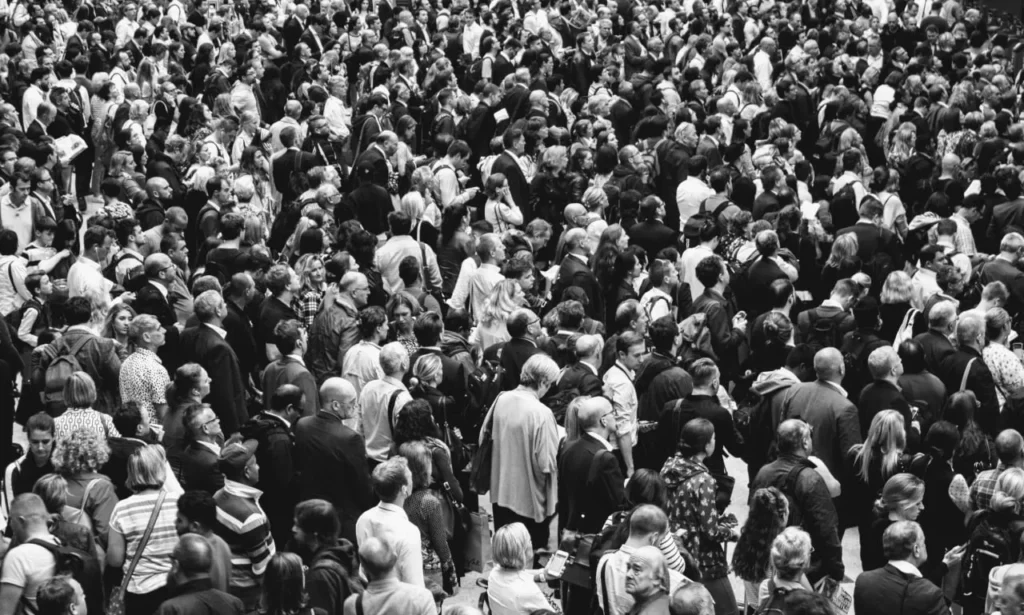
In this article, we break down
what is really happening in your beautiful, complicated brain.
You are not broken, boring, or antisocial;
your psychology is just playing chess
while everyone else is playing checkers.
1. Your Brain Has Zero Chill (Sensory Processing Sensitivity)
Most people’s brains come with a spam filter.
When they walk into a crowd, their brain deletes 90%
of the input—ignoring the flickering lights,
the background conversations, and the noise.
Your brain, however, is taking “screenshots” of everything.
- The 8K Experience: While everyone else watches life in standard definition, you are stuck with an 8K IMAX experience you never asked for. You process every micro-expression, every tonal change, and every shift in the environment simultaneously.
- The “One in Five”: Research shows that approximately 20% of the population has this heightened sensitivity. Your nervous system is permanently set to perceive everything.
- Evolutionary Advantage: This trait kept humans alive for millennia. While others relaxed, your ancestors (the sensitive ones) heard the predator approaching or noticed the poisonous plant. You are exactly what survival needed.
2. You Are Not Antisocial, You Are Anti-BS
You don’t hate people; you hate the performance.
In crowds, almost everyone is wearing a mask—pretending to have fun
or pretending to listen while their eye twitches.
- Human Lie Detector: You see through the performance. Your brain constantly translates the real conversation beneath the words, body language, and energy.
- Social Sophistication: Studies suggest that people who prefer solitude often score higher in emotional intelligence. You are not socially inept; you are socially sophisticated and refuse to play pretend.
- Depth vs. Width: The problem isn’t that you can’t do small talk; it’s that your brain experiences it like chewing on cardboard. You crave substance and real connection, and you would rather have one honest conversation at 3:00 AM than attend 50 networking events.
3. Your Dopamine System Works Differently
Here is where the neuroscience gets interesting.
Dopamine, the brain’s reward chemical,
works completely differently for you.
- Acetylcholine: When extroverts walk into a party, their brains throw a dopamine parade. Your brain, however, runs on acetylcholine, a neurotransmitter that rewards introspection, deep focus, and solitude.
- Internal Stimulation: You don’t need external stimulation to feel alive; you need internal space to access your full operating system.
- Gray Matter: Neuroscientists have discovered that introverted brains often have thicker gray matter in the prefrontal cortex—the part responsible for complex thinking and planning. When you are “doing nothing,” your brain is actually processing, connecting, and creating.
4. You Are an Emotional Wi-Fi Router
Have you ever walked into a space
and immediately known something was wrong,
even when everyone was smiling?
That is because your brain has “mirror neurons on steroids.”
- Emotional Sponge: You don’t just observe emotions; you download them. Spending an hour in a crowd means you are accidentally absorbing everyone else’s stress, anxiety, and excitement.
- Psychological Overload: Your nervous system tries to process hundreds of people’s emotional data while remembering to breathe. No wonder you need days to recover from a two-hour event.
- The Gift: This makes you one of the most emotionally intelligent people in the room. You understand subtext and sense what people need before they say it—a gift most people would break under.
5. You Are Not Running From Life, You Are Running Towards Yourself
Society often equates being busy
and loud with being successful and happy.
If you aren’t surrounding yourself with people 24/7,
the world assumes you are failing.
- The Truth About Silence: You have figured out what most people spend decades avoiding. Silence isn’t empty; it is where clarity lives. Solitude isn’t loneliness; it is where you meet yourself.
- Opting Out: You are not missing out; you are opting out of a system that was never built for people who think and feel deeply.
- Liberation: Your peace isn’t isolation; it is liberation. You understand that the quietest rooms often hold the loudest truths.
Summary
The next time someone asks why you don’t go out more, remember:
they are asking why you don’t drain yourself to fit into spaces
not designed for you.
You are not broken.
You are simply built for depth in a world obsessed with noise.

Truth
💯✌️
Amazing