
Every Type of Student in Class Explained

Every classroom is a microcosm of society,
filled with distinct personalities navigating the academic
world in their own unique ways.
From those who treat school as a full-time job to those
who view it merely as a social club or a comedy stage,
the differences in approach are vast.
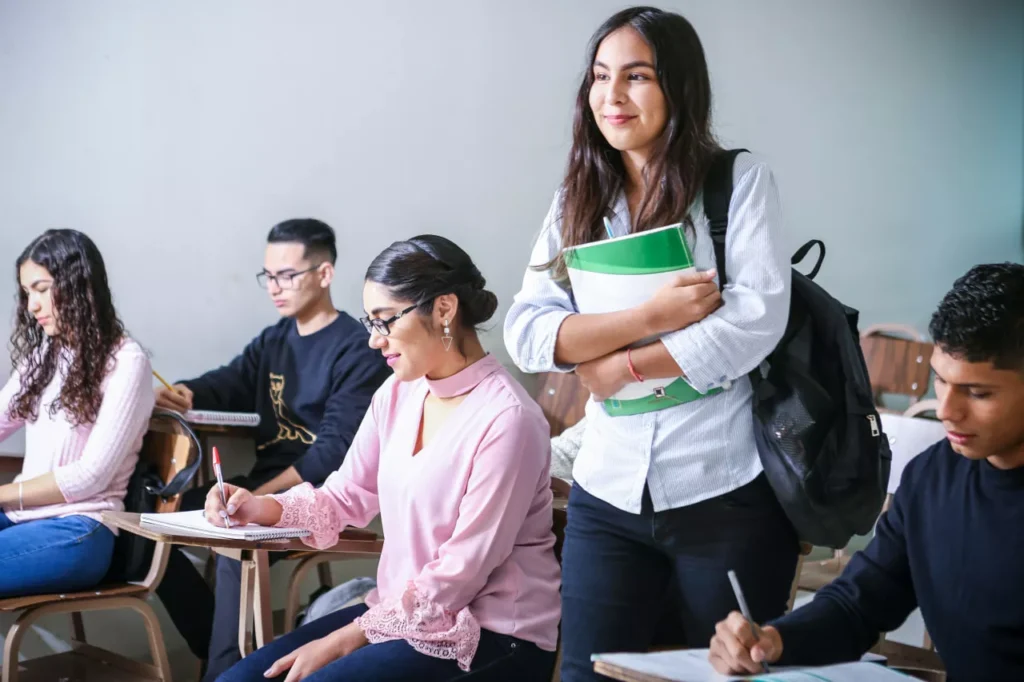
Here is a breakdown of the four main types of students you will find in any class.
1. The Perfect Student
The perfect student treats school like a full-time job
where success is mandatory,
and perfection is a performance.
- They walk into class 15 minutes early with an organized desk, color-coded pens, and a priority-based planner.
- They have already read the chapter twice and completed the homework the day it was assigned.
- Their hand shoots up for every question, and they take notes on their notes for fun.
- They maintain a perfect 4.0 weighted GPA and fill their after-school hours with tutoring, student council, debate team, and club leadership roles to appear well-rounded for colleges.
While teachers love the perfect student
and use them as an example, other students often label them
a try-hard or a teacher’s pet.
Only 2 to 3% of students maintain this level
of academic perfection through high school,
and it is an exhausting, pressure-filled existence.
2. The Gifted Slacker
The gifted slacker shows up exactly when the bell rings,
relies purely on mental notes,
and still manages to secure A’s and B’s.
- They are naturally gifted and understand the material better while half-listening and scrolling through their phone than students who take religious notes.
- They study for tests the night before—or sometimes an hour before.
- They calculate that the massive difference in effort required for a 4.0 GPA compared to a 3.7 GPA yields a minimal difference in outcomes.
- Homework is done during other classes, and group projects are completed alone the night before.
While they frustrate teachers who see their untapped potential
and annoy peers by making success look easy,
about 15% of students fall into this high-ability, low-effort category.
The brewing problem is that
when natural talent is no longer enough in college
or the real world, the gifted slacker won’t know how to try.
3. The Social Butterfly
For the social butterfly, school is not about learning;
it is about people.
They arrive right at the bell because they lost track
of time talking in the hallway.
- They know everyone’s name, from the quiet kid to the janitor, and their desk is always surrounded by friends.
- They despise homework because it means being alone, but they excel in group projects because organizing people and delegating tasks comes naturally to them.
- They maintain solid B’s and C’s, not from a lack of intelligence, but because studying alone feels like punishment.
Teachers have mixed feelings because the social butterfly brings
both disruption and energy to the class.
About 20% of students prioritize social connection
over academic achievement.
In the long run, their exceptional people skills might
make them highly successful,
or they might struggle because they never learned to work alone.
4. The Class Clown
The class clown walks in late
but armed with a perfectly timed joke that makes
even the teacher laugh, securing forgiveness before sitting down.
Their purpose in class is to entertain themselves and everyone else.
- They are often quite clever and possess high emotional intelligence, but their intelligence is wasted on humor instead of homework.
- Their grades are inconsistent, mostly scraping by with C’s and D’s.
- In group projects, they do not do the work, but peers still want them in their group because they make the suffering tolerable.
Teachers are exhausted by them, asking why they don’t just try.
However, for the class clown, trying isn’t funny,
and being funny is a survival mechanism—perhaps to hide insecurity
or simply to cure their own boredom.
They are gambling their future on either succeeding
in the entertainment industry or waking up at 30,
realizing they should have taken school more seriously.
