
The Psychology of People Who Have Gone Through Too Much

You know that person who laughs at absolutely everything?
The one who finds humor in situations
that would send most people into a spiral?
They have probably been through some tough experiences.
I am not talking about a bad haircut in middle school;
I am talking about the kind of experiences that fundamentally
rewire how you see the world.
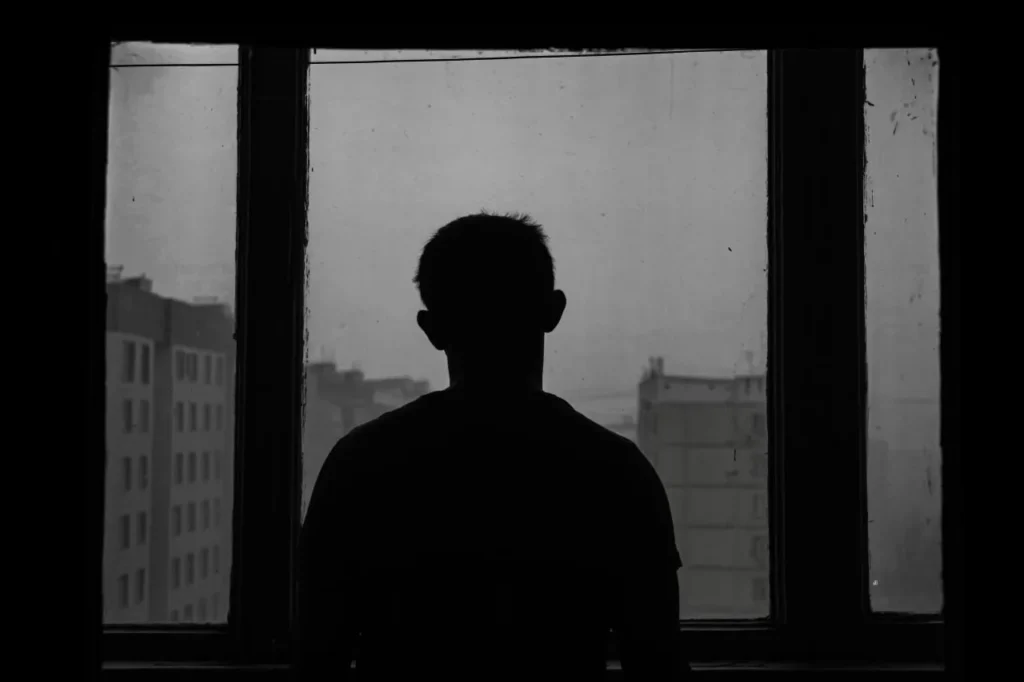
When you have survived your own storms,
other people’s rain showers just hit differently.
Here is what nobody tells you about people
who have endured too much:
their brain literally operates on a different frequency.
It is not broken; it is trained by necessity to become
a survival masterpiece that is still learning how to exist in a world
where the threat is no longer real.
Aggressive Empathy
You might think someone who has been through hell
would be cynical, bitter, or closed off.
Often, it is the complete opposite.
They become the most empathetic people you
will ever meet—aggressively so.
- Reading the Room: They can spot pain in others from a mile away because they have memorized that language fluently. They notice a slight shift in tone or a forced smile and are already planning how to check in on you later.
- Sensing Atmosphere: They know how to read silence—not just the absence of words, but the texture of it (heavy, disappointed, irritated, or tired). They sense changes in emotional temperature the way others sense changes in the weather.
Post-Traumatic Growth
According to psychologist Richard Tedeschi,
about half to two-thirds of people who go through significant
trauma experience Post-Traumatic Growth.
They do not just bounce back; they bounce forward.
- Deepened Relationships: Their connections with others become more profound.
- Crystallized Priorities: They know exactly what matters.
- Intense Appreciation: Their appreciation for ordinary moments becomes almost comically intense. They might literally tear up at a good sunset and are not even embarrassed about it.
The Cost: Hyper-Vigilance and Minimization
Despite their growth, these individuals often struggle
with hyper-vigilance.
Their threat detection system never fully turns off.
If they need to sit facing the door at a restaurant
or have multiple backup plans for a simple date,
it is not paranoia—it is a nervous system that learned
that safety is a luxury, not a guarantee.
Additionally, they often downplay their own experiences.
You will hear phrases like, “It wasn’t that bad,”
or “Other people have it worse.”
They have developed an allergy to being perceived as victims.
Admitting struggle feels like failure
because they survived by telling themselves they were okay.
Relationships: The Paradox of Connection
People who have been through too much often become
either incredibly loyal
or incredibly distant—sometimes both simultaneously.
- Reliability vs. Vulnerability: They will show up for you at 3:00 a.m. without hesitation, but if you ask them to be vulnerable about their own needs, they retreat. Closeness has historically come with consequences.
- Independence: They desperately want connection but are terrified of depending on anyone because dependence has come with a price tag. They learn to need nobody, which sounds strong but is incredibly lonely.
Humor as Armor
Their humor is often next-level and typically dark.
This is not about being insensitive;
it is about taking power away from pain.
When you can laugh at the absurdity of your own suffering,
it loses some of its grip.
Every joke is a tiny rebellion against the things
that tried to break them.
Control and Uncertainty
These individuals often have an intense relationship with control.
They might micromanage the smallest details of their life
(like which coffee mug to use)
while remaining eerily Zen about massive uncertainties (like career instability).
- The Logic: They have learned that the big stuff is often beyond their control, but the small stuff is manageable.
- Adaptability: They are exceptionally good at adapting to change. New job? Sure. Moving cities? Why not?
The Hidden Grief
Underneath the strength and humor,
there is a specific kind of grief—not for a person, but for themselves.
They grieve the version of themselves who trusted easily,
who laughed without checking the room first,
and who did not anticipate danger in every silence.
They are homesick for a place that existed only inside their own mind:
a childhood they did not fully get to live,
a softness they did not get to keep,
and a freedom they learned about too late.
Summary
People who have gone through too much do not just survive;
they develop a complex, nuanced understanding of
what it means to be human.
They know that strength is not about never falling apart;
it is about how many times you can reassemble yourself
even when the pieces do not fit the same way anymore.
Their survival became insight, and their pain became compassion.
They are like lighthouses—not because their life was gentle,
but because they learned to navigate storms
that would have broken others.
A lighthouse does not shine because it is perfect;
it shines because it remembers the darkness.
