
The Psychology of People Who Cut Everyone Off

You haven’t texted anyone in three months.
Your birthday passed with no plans and no complaints.
Someone asked if you wanted to hang out,
and you said you were busy.
But the twist is that you weren’t lying;
you were busy protecting your peace.
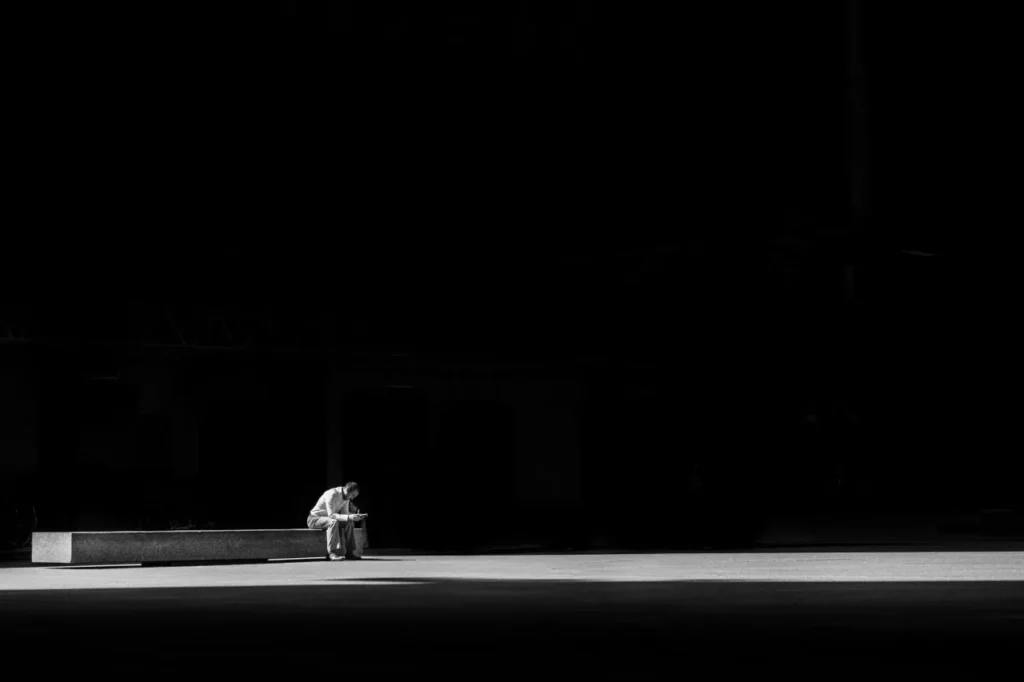
While people might call you cold or “the one who changed,”
there is a deeper psychology behind walking away from everyone.
It isn’t the villain origin story people think it is;
it’s often about stopping the pretense of not already being alone.
1. The Cost-Benefit Analysis of Connection
You didn’t wake up heartless; you woke up after years
of being the reliable one, the glue,
and the person everyone called in a crisis.
When you finally needed something,
all you heard were crickets
or saw a “sorry to hear that” text that never turned into a phone call.
The Mental Spreadsheet
At this point, your brain starts running a cost-benefit analysis
of every interaction.
- Energy Drain: You evaluate how much energy a relationship takes versus what you are getting back.
- The Data of One-Sidedness: You realize you were the one always texting first, adjusting your schedule, and sacrificing your needs while the other side offered nothing.
- Pattern Recognition: Your nervous system—a survival machine—recognizes that letting people in with your whole heart consistently ends with you holding the pieces alone.
Controlling the Exit
Because your brain learned that connection eventually
equals abandonment,
it started controlling the one variable it could: the exit.
Abandonment hurts significantly less
when you are the one who initiates it.
This isn’t self-sabotage;
it is a learned response to a cycle of disappointment.
2. The Blueprint of Childhood Abandonment
This behavior didn’t start in adulthood.
Somewhere in your childhood,
you learned that people leave or hurt you.
You may have had a parent who was physically present
but emotionally gone,
or you were the kid who learned to handle everything alone
because asking for help resulted
in being told to “figure it out yourself.”
High-Efficiency Survival
When your feelings were treated as inconvenient,
or you were told “not to be so sensitive,”
you learned that needing people is dangerous.
- Neural Wiring: Your nervous system absorbed the lesson that you can only expect to eventually be alone.
- The Learning Brain: You aren’t “broken”; your brain is simply learning from early experiences that drew the map of what connection looks like.
- Confirming the Bias: Every adult relationship that follows often just confirms this early blueprint, further wiring your brain around the truth that love eventually runs out.
3. Boundaries vs. Walls
People often say you’ve built walls,
but there is a distinction between walls and boundaries.
Walls keep everyone out;
boundaries are designed to keep the wrong people out.
The Detective of Patterns
After years of encountering only the “wrong” people,
those boundaries naturally begin to look like walls.
This phase isn’t about rejecting connection forever,
but about refusing indiscriminate access.
- Indiscriminate Access: You stop accepting anyone who feels “familiar but unsafe.”
- Identifying Red Flags: You become a detective of abandonment patterns, spotting them within the first few conversations.
- The “I’m Busy” Translation: You learn to translate “I’ve been so busy” into its real meaning: that the other person is emotionally unavailable.
Hypervigilance as Accuracy
You develop a form of hypervigilance that isn’t paranoid,
but accurate.
You read micro-patterns that others miss,
such as a subtle shift in tone or convenient excuses
that always favor the other person.
Your pattern recognition isn’t pessimism;
it’s data collection that keeps proving itself right.
4. The Loneliness of Being “Together”
The loneliest you ever felt wasn’t when you cut everyone off.
It was the time before—sitting in a room full of “friends”
and feeling invisible,
or being in a relationship and feeling fundamentally alone.
Isolation vs. Rejection
Physical isolation didn’t create the loneliness;
it just stopped the pretense that the loneliness wasn’t already there.
- Absence of Rejection: For someone who has been hurt repeatedly, isolation isn’t the opposite of connection; it is the absence of rejection.
- The Protected Space: It is the one space where you cannot be abandoned because no one is close enough to leave.
- Refusing the Broken Version: Choosing to have no relationships is a refusal to accept the “broken version” of connection—the one-sided, performative kind where people never actually show up.
5. Survival and Self-Preservation
Choosing yourself isn’t selfish; it’s survival.
It is the recognition that you cannot keep pouring
from an empty cup into people who treat you like
a convenience store—open when they need you
and forgotten when they don’t.
The Small Flame of Hope
Cutting people off isn’t an absence of love;
it is the presence of self-preservation.
You are protecting the part of yourself that still remembers
what it felt like to hope.
- Protecting the Flame: By refusing to let anyone “blow out” that small flame again, you keep the possibility of healing alive.
- Showing Up for Yourself: You stop being the villain in their stories and start being the person who finally showed up for themselves.
- Healing Space: These “walls” provide the space you need to heal and eventually become someone who might be ready to try again—but only on terms that honor who you are.
6. Living in the Quiet
The quiet you have created isn’t devastation;
it’s a favorite sound.
You are here in the space you cleared by cutting
away everything that was slowly killing you.
Staying Whole
This may not be the ending people wanted for you,
but it is the one that is keeping you whole.
- Understanding Patterns: The goal of this phase is to understand your patterns without judgment.
- The Term of Connection: If you eventually try again, it will be with someone who makes connections feel safe instead of terrifying.
- Self-Respect: Choosing privacy, depth, and presence over the performance of friendship is the ultimate form of self-respect.

Wow wow.
This is so real. I first experienced this loneliness when quite young in my life, and still feel it most times. Company toe most times seem to derail my being l feel.
I hope am as normal as anyone else….
You are❤️☺️
This is amazing i love this
☺️☺️❤️