
Psychology of People Who Prefer Solitude

You’ve canceled plans before and felt an inner relief.
You thought you might feel guilty, but instead,
it felt like something heavy just lifted off your chest.
But then, almost immediately, you probably wondered
if there was something wrong with you. Nothing is.
That relief is not laziness or some character flaw dressed up
as a preference.
That feeling is your nervous system exhaling.
We live in a culture that has quietly and persistently
treated solitude like a symptom—as if you prefer your own company,
there must be some wound underneath it,
some attachment trauma, social anxiety,
or any deficit that drove you inward.
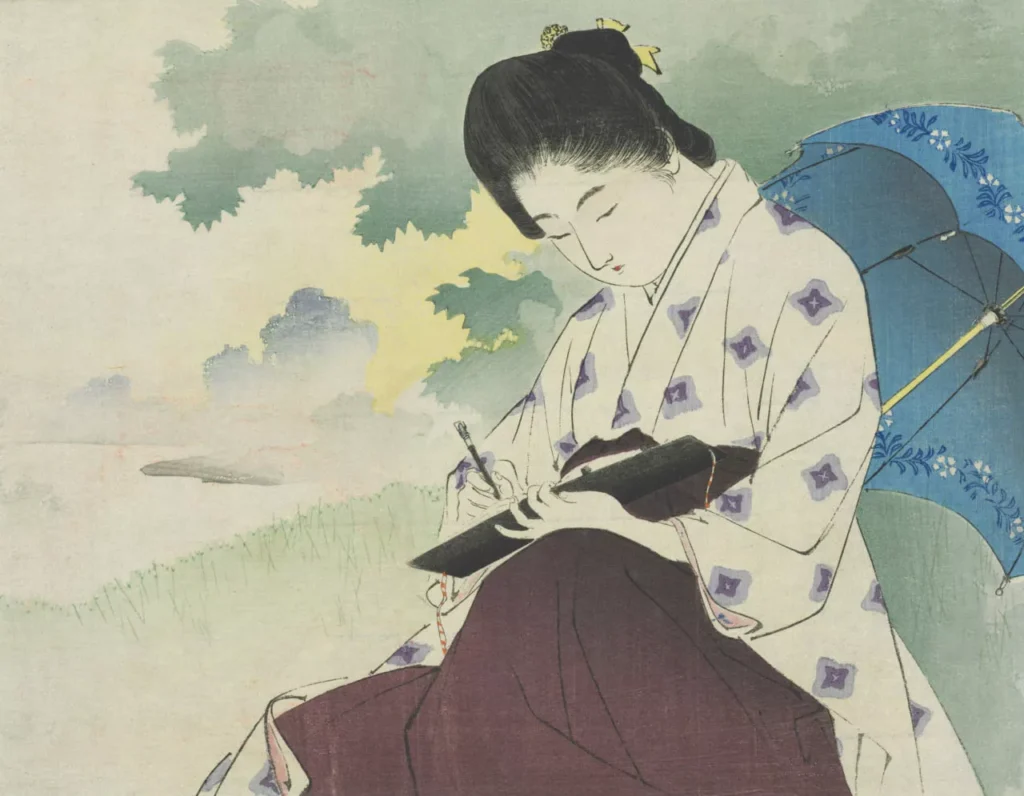
Sometimes that’s true, but other times a person just thinks
better alone, feels more like themselves,
recovers faster, loves harder, and lives fuller alone.
Instead of asking whether solitude is healthy or unhealthy,
we should be asking why we were told it had to be one
or the other in the first place.
The Cost of Performing Extraversion
Picture someone—let’s call her Maya.
She’s in her late 20s, works in marketing,
and genuinely likes the people in her life.
She’s not shy or depressed, but every time a group trip gets planned,
she feels a slow dread building in her chest about a week out.
She goes anyway, every time,
because not going feels like a character indictment.
She comes back exhausted in a way that sleep doesn’t fix.
For years, she assumed she just wasn’t social enough.
Elaine Aron’s research on highly sensitive people found
that around 15 to 20% of people have nervous systems
that take in and process sensory and emotional information
more deeply than others. Not more intensely, but more deeply.
The distinction matters.
These aren’t people who cry at commercials because they’re fragile;
they are people whose brains are quite literally doing more
work per social interaction than the average person’s.
When you’re running more processes,
you need more time to defragment.
It’s how they handle energy management.
So when someone comes home from a group trip
and needs days alone before they feel fully human again,
they’re not being antisocial.
They are recovering from something that genuinely
cost them more than it cost the person in the seat next to them.
And yet, they will probably apologize for it.
The Myth of Constant Connection
There’s a persistent myth that human beings are inherently
social creatures and that any deviation from that is a deviation from health.
Yes, humans are wired for connection.
John Cacioppo’s decades of research showed that loneliness
activates the same neural threat responses as physical pain.
So we do need people, but the distinction between needing people
and needing constant people is important.
The research on chosen solitude shows something more nuanced.
Reed Larson, a psychologist who spent years studying
adolescence and time alone,
found that voluntary solitude—solitude that wasn’t forced
or punitive—was associated with improved mood
and higher rates of self-reflection when people returned
to social settings.
The keyword across all of this work is chosen.
Forced isolation can be corrosive; chosen solitude is closer
to the opposite of that.
What’s strange is that as a society, we’ve somehow conflated the two.
We see someone eating alone and automatically feel sad for them.
We see someone declining an invitation
and assume rejection or depression.
We’ve built a social script where presence equals wellness
and absence equals lack.
Reconnecting With Your Inner Life
Some people who prefer solitude have internalized
that social script so deeply that they’ve spent years
performing extraversion just to feel more normal.
Think about what that does to a person over time.
When you spend years masking a natural preference,
you start to lose the thread back to what you actually want.
You go to the parties, you fill the silence,
you answer the phone even when you don’t have the bandwidth for it.
All of that compounded creates a low-level exhaustion that
people usually attribute to work stress or being busy.
They never think to ask:
“What if I’ve just been living slightly outside myself for a very long time?”
When you finally stop treating solitude like it’s a problem,
it gives you uninterrupted access to your own inner life.
Your inner self is where your values live,
where your intuitions get sorted, and where those emotions
you were too busy to feel during the week finally get processed.
Solitude is a very specific kind of fullness that noise typically prevents.
People who are genuinely comfortable alone
(not avoidant or shut down) tend to have
a clearer sense of what they think before a room influences them.
They tend to feel more comfortable disagreeing
because they’ve already had the conversation with themselves
first by interrogating their own positions in the quiet.
It’s a kind of cognitive independence that’s become increasingly rare.
Recharging vs. Retreating
Solitude can also become a hiding place;
it can be the comfortable face of avoidance.
There’s a version of this where someone isn’t recharging;
instead, they’re retreating alone.
Only the person inside that experience really knows the difference.
Recharging feels like restoration.
Retreating feels too much like relief that slowly curdles
into something flatter: numbness and disconnection.
If you’ve ever spent a weekend completely alone
and come out of it feeling vaguely worse instead,
that’s worth paying attention to as useful information about yourself,
not as a judgment.
The people who seem to navigate solitude best
are the ones who don’t treat it as an identity.
They’re not “loners.”
They’re just tending to something the way you’d water a plant.
They go inward and then come back, usually more regulated,
present, and capable of actual intimacy.
Intimacy requires presence, and that requires you
to not completely deplete yourself performing a connection
that you didn’t have the energy for.
In a world that monetizes your attention, profits from your boredom,
and engineers entire platforms specifically
to make stillness feel unbearable,
choosing to be alone with your own thoughts, undistracted,
is maybe one of the more countercultural things a person can do.
If you felt that relief when the plans got canceled,
or if you’ve always felt slightly more yourself in the quiet than
in the crowd, it’s just your nervous system
and your psychology telling you something about what you need.
The only mistake that actually costs you is spending
so long defending that preference, hiding it, or worse,
apologizing for it, that you never actually use it.
