
4 Ruthless Lessons I Learned From Machiavelli

Niccolò Machiavelli was the guiding spirit
behind The 48 Laws of Power.
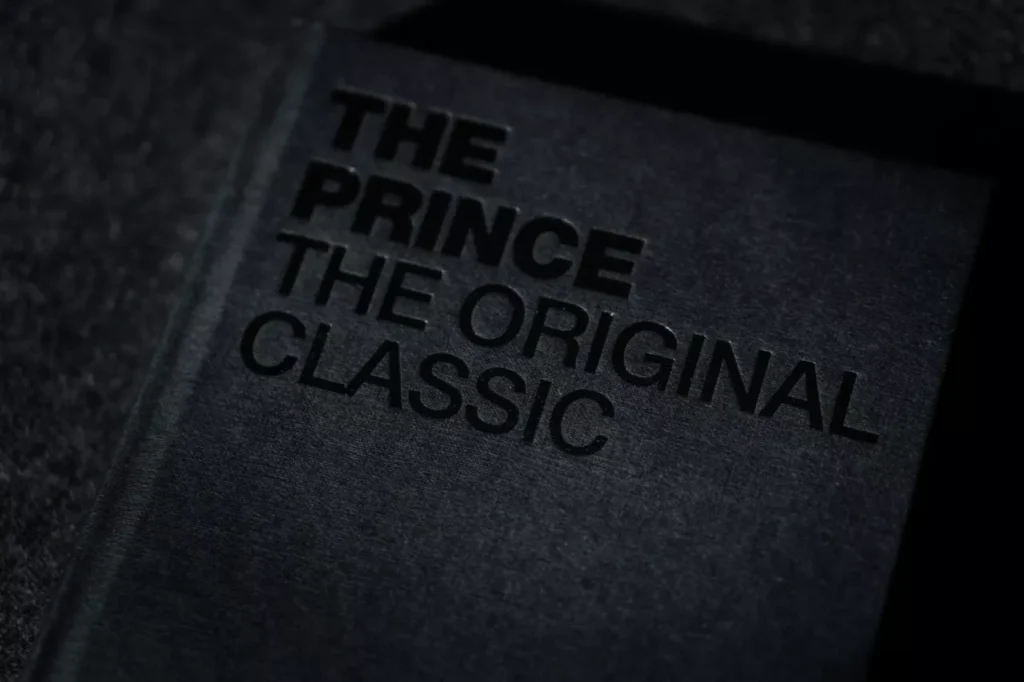
I bought my first copy of The Prince when I was 15 years old.
The cover featured a large hand with people inside it,
as if they were being controlled—a perfect metaphor for the book.
Even at that young age,
I was troubled by the sense that people wore masks
and pretended to be something they were not.
Machiavelli didn’t just explain this; he validated it.
Here are the four ruthless lessons his work taught me about human nature and power.
Lesson 1: Rip Off the Social Mask
When you are young, one thing that often irritates you
about adults is how fake they are.
You see through them. You see that they are putting up a front
that is not really who they are.
Machiavelli’s genius was that he ripped
that mask right off people’s faces.
He exposed the “human animal” as it truly is.
While society encourages us to be polite
and pretend that we are all motivated by charity and goodness,
Machiavelli taught me that deep down, the human animal wants power.
To navigate the world effectively,
you must stop being fooled by the polite fronts people present.
Lesson 2: Judge by “The Effective Truth” (Verità Effettuale)
Machiavelli introduced a concept that influences my thoughts
to this day: The Effective Truth.
This teaches that the truth of people is not found in what they say
about themselves, but in what they actually do.
- The Pope Paradox: In Machiavelli’s time, the Pope would claim to be the representative of Christ on Earth. However, Machiavelli looked at the actions of the Borgia Pope—the nastiest of them all—and saw him not as a holy figure, but as a Mafia Don.
- The Reality: The Pope was trying to conquer Italy and create a Vatican Empire. That was the “effective truth.”
- The Lesson: Ignore the titles and the holy words. Look at people’s actions to see what they truly want.
Lesson 3: Realism is Like Cold Water
Machiavelli’s writing is often described as “evil,”
but it is actually just crystal-clear realism.
Reading him is like getting a splash of cold water in your face.
We often imagine that we are sharp or realistic today,
but Machiavelli was doing this in 1514.
He wrote about religious figures as if they were warlords
and analyzed human behavior without
the “bullshit” people usually throw at you to deceive you.
- Not Cynicism: I do not believe Machiavelli was cynical. “Cynical” is the wrong word. He was “sharp.”
- The Lens: He forces you to look at the human animal in the clearest possible light, free from moral judgment or wishful thinking.
Lesson 4: Multidimensionality is Power
While people focus on The Prince, Machiavelli was not
a one-dimensional villain.
He was a creative man, a playwright, a poet,
and a great seducer who had numerous affairs.
- The Creative Strategist: He wrote The Art of War, but also Mandragola, a hilarious and scandalous play about religion.
- The Lesson: To understand the world deeply, you cannot be narrow. Machiavelli’s ability to see the world “ruthlessly” was tied to his earthiness and his ability to embrace all aspects of life—from high politics to seduction and comedy.
Summary
Machiavelli teaches us to look past the “what ought to be”
and focus entirely on “what is.”
By ripping off the social mask,
judging people solely by the effective truth of their actions,
and embracing a sharp, cold realism,
you protect yourself from being deceived by the fronts people put up.
As Machiavelli showed,
true power comes from seeing the world exactly as it is.
